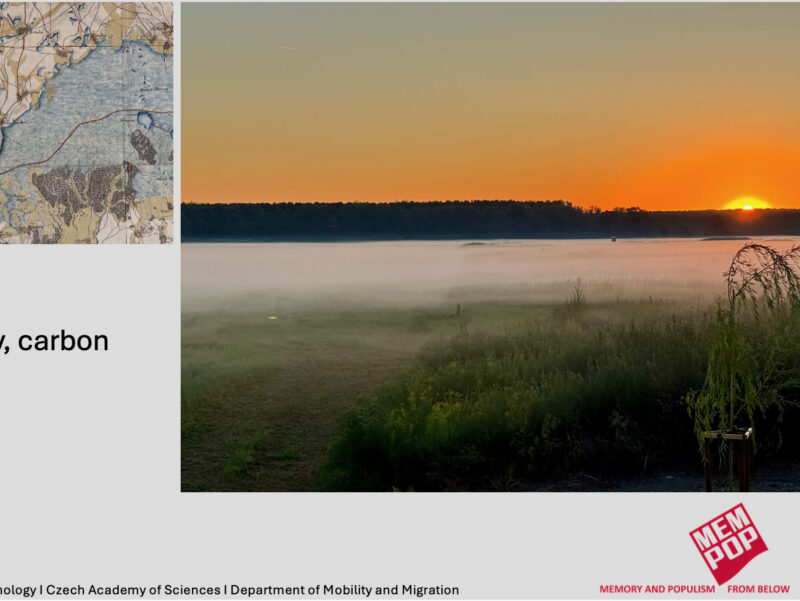
Franz Graf at the workshop “Rethinking Landscape for Societal Transition” in Uppsala
MEMPOP postdoctoral researcher Franz Graf presented his research at the Workshop “Rethinking Landscape for Societal Transition”, organized by the AK Landschaftsforschung and held at the Swedish University of Agricultural Sciences in Uppsala from 24 to 26 September 2026.
His paper, “Progressive for whom? Rewetting, landed power and populist contestation in an Austrian borderland”, was presented as part of the panel “Progress and the Political” and formed an analytical counterweight to simplified distinctions between “progressive landscape transformation” and “populist resistance”. The paper examined contested hydrological projects in Burgenland, where current visions and measures of restoration and water retention respond to falling groundwater levels and degraded wetlands.
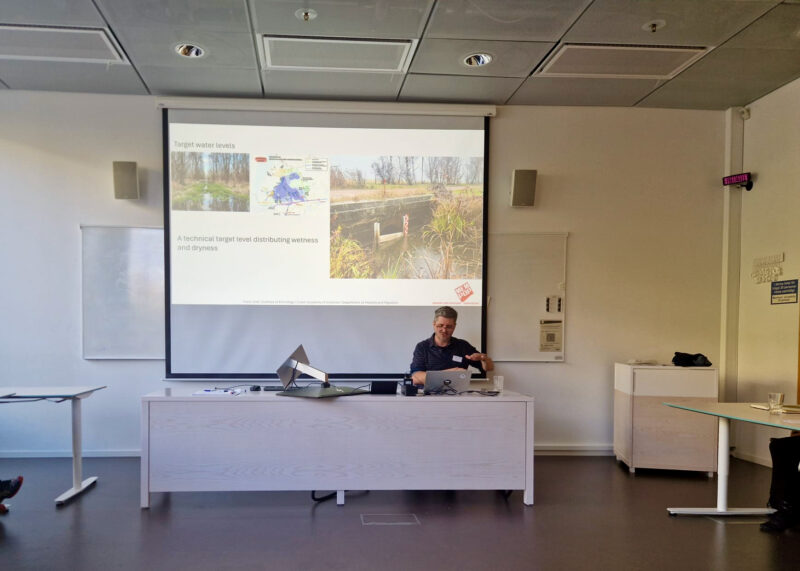
Yet these ecologically compelling visions raise democratic questions: who participates in shaping this future, who becomes a legitimate partner, and whose histories of dependence, mistrust and unequal access to land remain out of view? Drawing on ethnographic fieldwork with farmers, conservationists, engineers, officials, landowners and residents, Graf traced conflicts over target water levels within a longer history of drainage, the absence of land reform and aristocratic landed power.
While contestation can be captured by right-wing actors, the paper argued that resistance to landscape transformation should not be dismissed too quickly as anti-ecological backlash. It traced how memories of unequal land ownership and political exclusion shape present grievances, and how these grievances can become available for populist articulation. Such resistance can also point to unresolved questions of ownership, participation and popular sovereignty in projects of ecological restoration and water governance.
The workshop brought together scholars from fields such as cultural geography, social anthropology, landscape research and planning to discuss the role of landscape in current socio-ecological transformations. Contributions examined, among other things, far-right visualisations of threatened homelands, competing understandings of the public value of protected landscapes, and the historical legacies of landscape planning. These discussions opened up ways of rethinking landscape as a historically sedimented place and an arena for examining processes of depoliticisation and repoliticisation, as well as future-making.